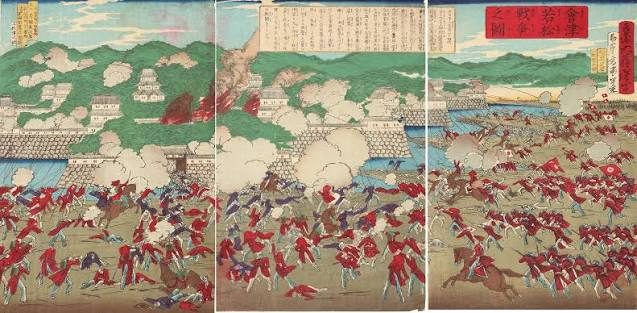
The Aizu War beginsThe Aizu War begins
On August 23, 1868, imperial forces began their assault on the castle town of Aizuwakamatsu. Domain lord Matsudaira Katamori chose to hold the castle, and Tsurugajo is said to have sheltered roughly 4,000 to 5,000 people — samurai and their families combined. What followed was nearly a month of siege warfare before the castle finally surrendered.
The Joshitai — women who took up armsThe Joshitai — women who took up arms
During the siege, women joined the fighting alongside male samurai in significant numbers. The best known is the "Joshitai" (women's corps) led by Nakano Takeko. Takeko was skilled with the naginata and was shot and killed in combat with imperial forces; the manner of her death is still recounted today. Niijima Yae (later the wife of Niijima Jo, founder of Doshisha) was another who fought through the siege, Spencer rifle in hand.
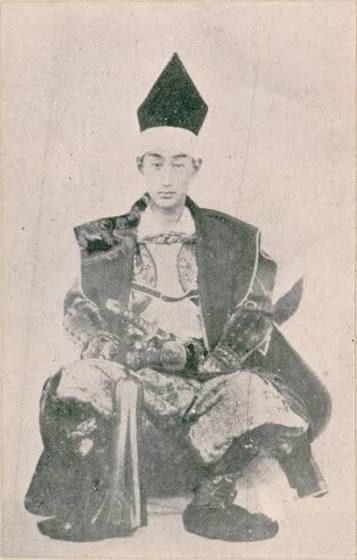
How did the castle hold out for a full month?How did the castle hold out for a full month?
Tsurugajo's month-long resistance owed much to the formidable fortifications laid down by Gamo Ujisato and, later, Kato Yoshiaki. The outer perimeter was studded with sixteen gate-baileys (koguchi), and the clear separation of inner and outer wards reflected a defensive philosophy that, more than 260 years after the castle's founding, still held firm against the modern weaponry of the imperial forces.
The Aizu War is often framed as a battle of pure willpower, but as a siege it is highly regarded tactically. The imperial forces struggled against Tsurugajo's defenses and ultimately had little choice but to subdue the surrounding region and effectively starve the castle out.
Surrender, and afterSurrender, and after
On September 22, 1868, the Aizu domain finally surrendered and Tsurugajo was handed over. Lord Katamori had his death sentence commuted and his life spared, but a harsh fate awaited his retainers. Many were ordered relocated to Tonami, an unforgiving stretch of the Shimokita Peninsula — and from there begins a hard story of rebuilding.